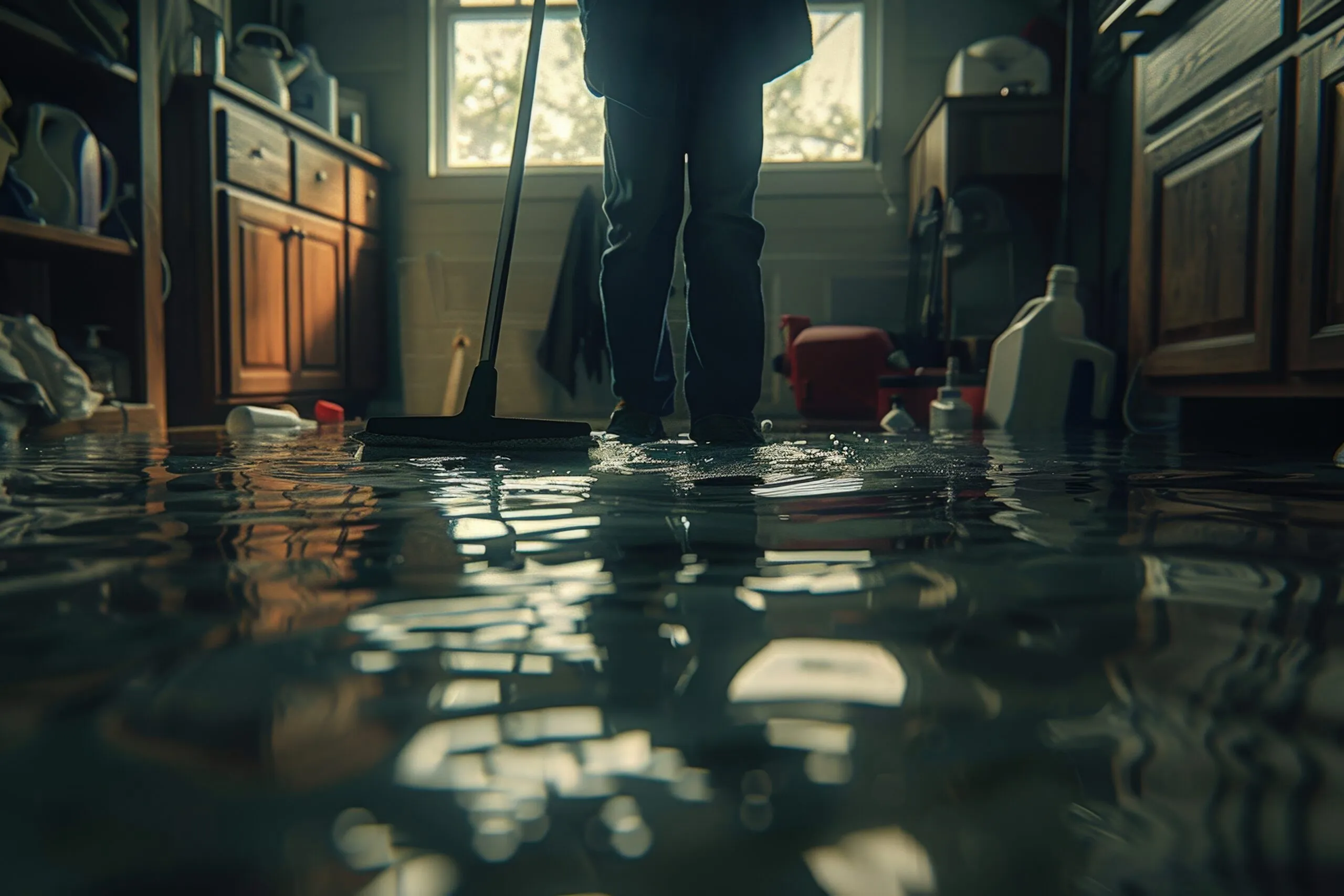
Water Damage Statistics
Water Damage Statistics
Water damage causes 28% of home claims with average $13,954 costs. Guardian Insurance explains coverage options, prevention tips, and claim processes.Water damage is one of the most common causes of home insurance claims. It accounts for nearly 28% of all home insurance claims, making it the second most common cause of property damage losses after wind and hail. Whether it’s storm surge from a hurricane or bad flashing around a chimney, when water gets into parts of your home that it doesn’t belong to, it can cause considerable damage. The longer the water is in your home, the worse the damage — and the more expensive the repairs — will be.
Home insurance covers most types of water damage, but there are some caveats. Most policies don’t include flooding or gradual damage, but if the source of water damage is sudden and accidental — like a pipe freezing and bursting — your insurance will likely help pay for repairs.
In this article, we analyzed data from the Insurance Information Institute and FEMA to dive into the latest water damage statistics, the most common kinds of water damage, and ways to identify and prevent it.
Key Takeaways
- The average cost of water damage and freezing claims from 2018 to 2022 was $13,954.
- Just one inch of water can cause up to $25,000 worth of damage to a home.
- The average premium after filing a water damage claim is $3,106, about $180 more than the national average.
- 99% of all 3,144 counties in the United States experienced a flood event between 1996 and 2022.
- Most water damage comes from plumbing failures rather than storms, with common causes including leaky roofs, burst pipes, overflowed toilets, and blocked drains.
- Standard homeowners insurance typically doesn’t cover flooding or gradual damage, but does cover sudden and accidental water damage like burst pipes.
- Flooding costs Americans between $180 billion and $496 billion annually, yet over 40% of flood insurance claims come from areas not considered high-risk for flooding.
Water Damage by the Numbers
According to the Insurance Information Institute, water damage and freezing was the second most common cause of property damage home insurance losses behind wind and hail in 2022. Nearly 28% of all home insurance claims were due to water damage and freezing. From 2018 to 2022, the average average amount paid for each claim (severity) of water damage and freezing claims was $13,954.
Most Common Causes of Water Damage
Storm damage and flooding can be the most destructive forms of water damage, but they’re not the most common. Most water damage comes from various kinds of plumbing failures in your home. These are some of the most common culprits of water damage:
- Leaky roof
- Overflowed tub or toilet
- Frozen/burst pipes
- Blocked drains
- Bad plumbing
- Faulty HVAC
- Dripping faucet or showerhead
- Faulty sprinklers
- Leaky water supply line
- Clogged gutters
- Corroded pipes
- Appliance leak
- Sump pump failure
- Leaky water heater
- AC leak or condensation
- Sewage backup
Because these are sudden, often unexpected causes of water damage, most home insurance policies will cover them. But there are some cases that fall outside of your policy coverage and may even require additional policies. These include:
- Flooding: Most insurers don’t include flooding as part of a standard homeowners policy. If you’re worried about flood damage, it may be prudent to purchase flood insurance. In higher risk areas, especially those prone to hurricanes and storm surge, you may be required to purchase a flood insurance policy. If your insurer doesn’t offer one, you can get coverage through the National Flood Insurance Program (NFIP).
- Sump pump failure or sewer backups: Most standard policies don’t include coverage for sump pump failures or sewer backups, but many providers offer supplemental packages that protect your home in the event of a clog or sewer backup that floods your home.
- Homeowner negligence: It’s your job to properly maintain your home, and if an insurance company determines that water damage is due to a lack of maintenance, it will deny your claim.
Flood Damage Statistics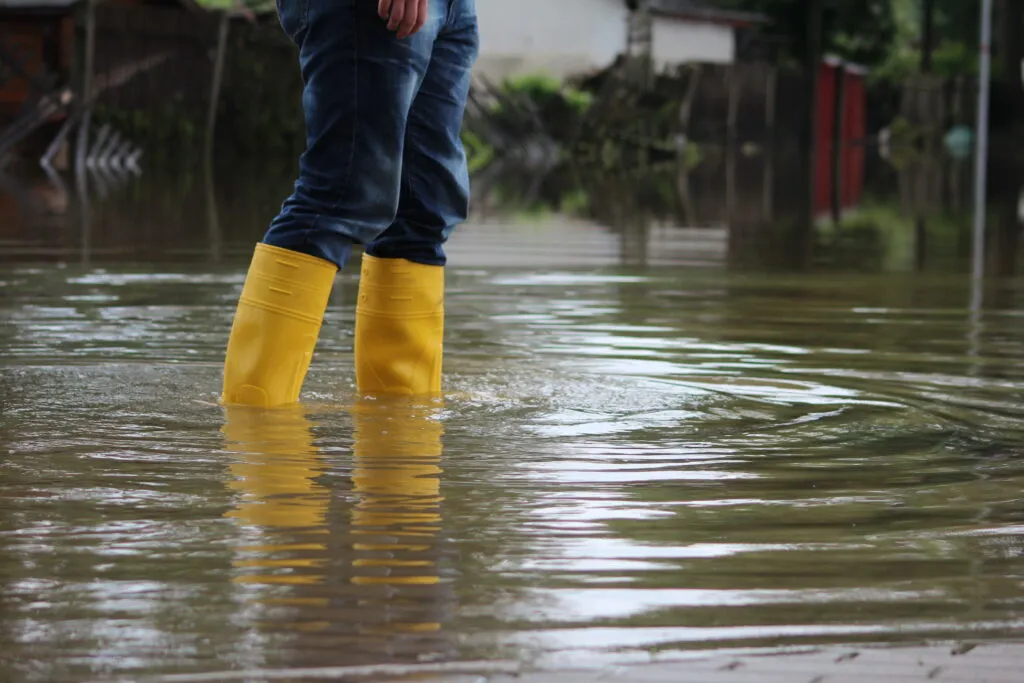
Credit: Adobe – Royalty Free
Flooding costs Americans between $180 billion and $496 billion each year. A study by the United States Senate found that the expected annual damage from flooding to homes with federally-backed mortgages ranges from $11.1 to $15.1 billion. The III estimates that 22% of homeowners were at risk for flooding in 2023, and that number is expected to increase due to climate change.
Flooding can be catastrophic, but according to the Federal Emergency Management Agency (FEMA), even just one inch of water can cause up to $25,000 worth of damage. Flooding is rarely covered by a standard homeowners insurance policy, but FEMA offers flood insurance through the National Flood Insurance Program (NFIP). They also report that 99% of the 3,144 counties in the United States experienced a flood event between 1996 and 2022. In fact, 40% of NFIP claims come from outside the high risk areas.
Types of Water Damage
Home water damage falls into three main categories based on cause and severity. Below is a table outlining each category.
| Category | Description |
|---|---|
| 1: Clean Water | Sanitary water that poses no health threat such as melted snow or tap water. |
| 2: Gray Water | Contaminated water that is not potable or otherwise unsafe for direct contact such as dishwasher overflow. |
| 3: Black Water | Toxic and unsanitary water that poses significant health threats like sewage water. |
Category 1: Clean Water
Category 1 water is considered sanitary and originates from a source that doesn’t pose harm to humans. Water damage in this category can come from things like heavy rainfall, melting snow and ice, or sink overflows.
Category 2: Gray Water
Gray water is water that has a degree of chemical or biological contamination and is therefore unsafe for human consumption or direct contact. Damage from Category 2 water can come from fire protection sprinklers, dishwasher discharge, or a sump pump failure.
Category 3: Black Water
Category 3 water, also called black water, is the most dangerous category. Black water is highly toxic and unsanitary and poses significant health risk to humans. Category 3 damage is often extreme, resulting from sewage leaks, river or stream flooding, or Category 2 water that isn’t sufficiently removed from a structure.
What Does Water Damage Look Like?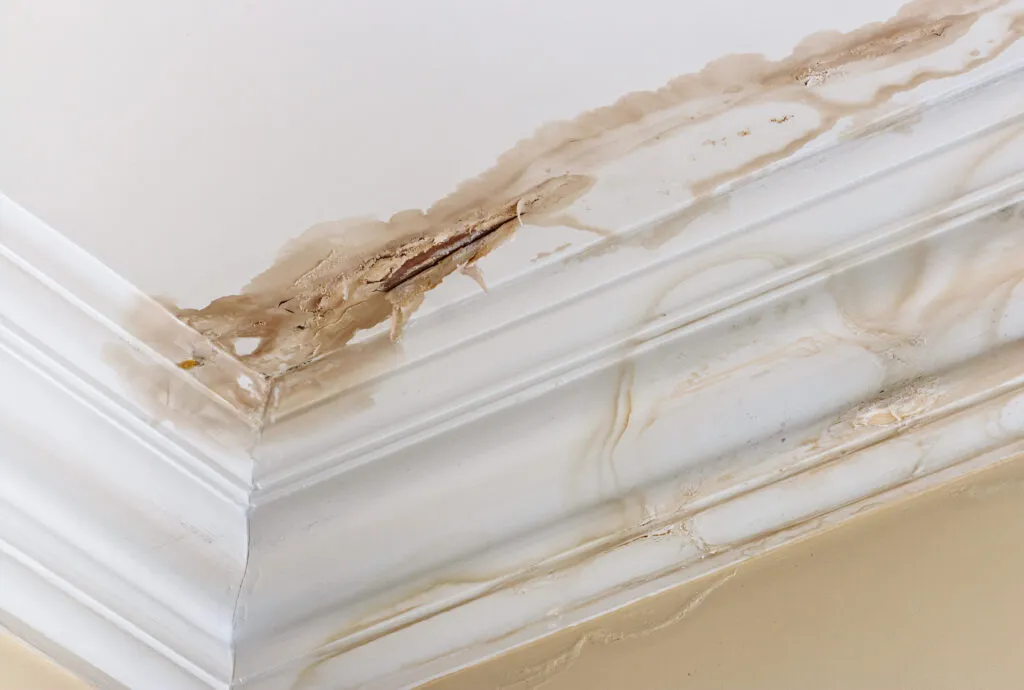
Credit: Adobe – Royalty Free
There are many ways you can detect water damage in your home. Keep an eye out for the following:
- Water stains. If you see stains or slight discolorations on your wall, floor, or ceiling, there may be a water leak in your roof or walls.
- Mold/mildew. If mold appears in your home, it’s a sign of a serious undetected leak.
- Dripping. The sounds of dripping, scratching, or rushing in your home could be the signs of a leak in the plumbing.
- Humidity. Unexpected humidity and moisture in your home is a serious sign of a leak.
- Peeling paint and warped floorboards. Both of these are telltale signs of a leak in the walls.
How To File a Claim
The process for filing water damage insurance claims will vary based on your provider and coverage, but here’s a list of the general steps you can take:
- Contact your insurer immediately: You should contact your insurer as soon as you notice water damage. Most providers have an online claims portal in addition to a phone line.
- Shut off the water in your home: If you discover an active leak, your insurer will likely ask you to stop the water flow to your home by shutting off the water valve. If it’s an especially complicated leak, they may ask you to contact a plumber to stop the leak and therefore minimize any potential damage.
- Record the damage: Document the damage in your home, both to the dwelling itself and to any and all personal belongings. Your provider may ask you to catalog receipts, purchase information, and photos of the damaged items.
- Gather evidence: Take thorough, detailed photos of the damage to show proof and bolster your claim.
- Follow up with the adjuster: After you’ve filed a claim, follow up with the claims adjuster to make sure they have all the information needed to process. Once your claim is approved, you’ll receive funds to cover repairs minus your policy’s deductible.
When Is It Not Worth It To File a Claim?
Filing a claim can affect your premium, with the average premium for water damage and freezing claims being $3,106, about $180 more than the average national premium according to Quandrant Information Services. Not all water damage incidents warrant filing a claim, so consider these factors when weighing the decision:
- The deductible versus the cost of repairs. Most insurance policies have a deductible, which is the amount you have to pay out of pocket before the policy kicks in. If the cost of repairs is close to the deductible, you may want to think about paying for repairs yourself in order to avoid increasing your insurance premium.
- The severity of the damage. If the water damage is minimal and requires only a simple repair or cleanup, it may not be worth it to file an insurance claim. Significant structural damage from major leaks or flooding could require extensive cleanup and repairs, so it might be necessary to file a claim.
Tips for Preventing Water Damage
Water damage can be expensive to fix, but you can avoid hefty repair costs by taking some precautions. Here are a few steps you can take to prevent water damage:
- Watch for signs of water damage. Regularly inspect walls and ceilings for signs of water damage.
- Check pipes and faucets. Inspect the hoses, pipes, and faucets throughout your home for cracks or leaks and replace accordingly.
- Notice any changes in how tubs, toilets, and sinks drain. If you notice any changes in how these drain, contact a plumber immediately to diagnose and repair the issue.
- Monitor your water bill. If there’s a sudden spike in your monthly water bill, you may have a leak, which could lead to damage in your home.
- Protect pipes from freezing. Wrap exposed pipes in insulation and keep your home at least 50 degrees during the cold seasons. If temperatures drop significantly, keep at least one faucet dripping to enable water flow and prevent freezing.
- Clean gutters regularly. Clean your gutters at least twice a year and consider installing gutter guards to keep out debris.
Steps To Take After You Notice Water Damage
- Call your insurance company to explain the damage and begin the claims process.
- Protect yourself and your appliances by turning off power and closing the main water valve to your home.
- To avoid serious damage, start the restoration process within 24 to 48 hours.
- Use a dehumidifier to remove excess moisture in the affected area.