
Home Insurance Statistics 2025
Home Insurance Statistics 2025
Explore emerging trends in the home insurance industry that are driving up the cost of annual premiums and causing more carriers to exit high-risk states.Between 2021-2024, home insurance carriers increased premiums in 95% of the U.S., affecting almost all homeowners nationwide, according to the Consumer Federation of America. For over a third of homeowners, premiums rose 30% or more.
The national average for home insurance is $2,927 for a home of $350,000 and deductible of $1,000. However, home age, value, geographical risk, and other factors can greatly affect annual premiums. Nineteen of the 50 states in the U.S. (38%) have a higher annual home insurance premium.
We analyzed data from Quadrant Information Services, the Insurance Information Institute, and the National Association of Insurance Commissioners (NAIC), among other sources, to explore the overall state of the home insurance industry. Homeowners who educate themselves about industry trends can better anticipate any fluctuations in home insurance rates and adjust their budgets accordingly.
Key Takeaways
- In the five-year span between 2018-2022, the average homeowners insurance premium rose 8.7% faster than the rate of inflation.
- Every $100,000 increase in home value adds approximately $400-500 to your annual insurance bill, with million-dollar properties facing premium costs exceeding $5,300.
- Your credit score significantly impacts your premiums, with poor credit homeowners paying nearly double ($4,638) compared to those with excellent credit ($2,329).
- Oklahoma has the highest average annual premium at $6,352, while Hawaii has the lowest at $850.
- North Carolina homeowners pay $310 more than the national average, ranking among the top third most expensive states at $3,237 annually.
- The five year average from 2018 to 2022 for wind and hail accounted for 42% of all homeowners insurance losses.
- In 2022, homeowners in high-risk areas due to severe weather paid 82% more for annual premiums than those in low-risk areas.
Home Insurance by the Numbers
In 2025, American homeowners pay an average of $2,927 annually for home insurance that provides $350,000 in dwelling coverage with a $1,000 deductible. With every $100,000 increase in home value and corresponding dwelling coverage, homeowners pay approximately $400-$500 more for their yearly premiums, putting the average premium for $1 million properties at $5,367 annually.
| Dwelling Coverage | Average Annual Premium |
|---|---|
| $250,000 | $2,394 |
| $350,000 | $2,927 |
| $450,000 | $3,353 |
| $750,000 | $4,519 |
| $1,000,000 | $5,367 |
For a $1000 deductible home.
Credit score and home age represent two key factors that influence the average annual home insurance premium homeowners pay. Those with excellent credit pay an average of $2,329 annually, $598 less than the national average. At $4,638 annually, homeowners with poor credit pay nearly double what homeowners with excellent credit pay. Lenders perceive homeowners with excellent credit as less of a risk than those with lower credit scores based on their financial habits and the probability they’ll file a claim.
| Credit Tier | Average Annual Premium |
|---|---|
| Poor | $4,638 |
| Good | $2,927 |
| Excellent | $2,329 |
*For a $350,000 dwelling and $1,000 deductible
Home insurance premiums tend to be higher for older homes due to their condition. Owners of homes built in 1950 and 1980 pay similar amounts for home insurance, with annual average premiums of $2,505 and $2,514, respectively. However, homes built in 2024 cost over $900 less to insure than those built in 1980. The $1,611 average annual home insurance premium for homes built in 2024 is also $1,316 less than the national average.
| Home Age | Average Annual Premium |
|---|---|
| 2024 | $1,611 |
| 1980 | $2,514 |
| 1950 | $2,505 |
*For a $350,000 dwelling and $1,000 deductible
Home Insurance Premiums by State
Oklahoma homeowners pay the highest average home insurance premiums among all 50 states, while those in Hawaii pay the lowest. Homeowners in Oklahoma pay more than double the national average annual home insurance premium and more than seven times the amount that Hawaii homeowners pay. Explore the most expensive and most affordable states for home insurance premiums below.
Most Expensive States for Home Insurance
At $6,352 annually, home insurance premiums in Oklahoma cost the most in the nation. Premiums in the top five most expensive states for home insurance cost $4,392 or more annually. Below are the five most expensive states for home insurance premiums:
- Oklahoma: $6,352
- Nebraska: $5,605
- Texas: $4,912
- Arkansas: $4,752
- South Dakota: $4,392
Each of these five states belongs partially or fully to Tornado Alley, with Oklahoma at its heart. Flat prairies, rolling hills, and vast plots of agricultural land characterize this tornado-prone geography, which is also home to freezing conditions in Nebraska and South Dakota, wildfires in Oklahoma and Texas, and hurricanes along the Gulf Coast.
Cheapest States for Home Insurance
Hawaii’s average annual home insurance premium of $850 is the lowest nationwide. It’s also more than $2,000 less than the national average and $650 less than the fifth-cheapest state for home insurance. Here are the top five cheapest states for home insurance premiums:
- Hawaii: $850
- Delaware: $1,250
- Vermont: $1,377
- Oregon: $1,437
- Nevada: $1,500
Despite the high risk of tsunamis in Hawaii and wildfires in Nevada, the states above score relatively low in terms of risk of hurricanes, coastal flooding, hail, tornadoes, and other extreme weather events, according to FEMA’s National Risk Index. Home insurers in Hawaii and Oregon are also prohibited from using a homeowner’s credit score when determining premiums, according to Experian.
Where Does North Carolina Land?
North Carolina ranks among the top third most expensive states for home insurance premiums, with an annual average premium of $3,237—$310 more than the national average. As the 17th most expensive state for home insurance, North Carolina also hosts several cities where home insurance premiums are $8,050 annually, including the following:
- Beaufort
- Carolina Beach
- Emerald Isle
- Hampstead
- Holly Ridge
- Morehead City
- Ocean Isle Beach
North Carolina homeowners recently experienced a 7.5% home insurance base rate increase, which took effect on June 1. Yet another identical hike is scheduled to occur in June 2026. Homeowners can expect to pay an average of $243 more per year with each 7.5% base rate increase over the next two years.
However, these home insurance premium increases generally apply to North Carolina and don’t account for significant increases in coastal counties. Homeowners in the following counties have already seen a 16% rate increase this year and will see a 15.9% increase in 2026, according to the North Carolina Department of Insurance:
- Brunswick
- Carteret
- New Hanover
- Onslow
- Pender
For homeowners in Haywood, Madison, Swain, and Transylvania counties, home insurance rates will remain unchanged for the next two years. However, all other North Carolina counties experienced an increase this year and are expected to see another increase in 2026. Multiple factors contributed to these home insurance rate increases, including hurricane frequency and resulting damage, elevated construction costs due to inflation, and high reinsurance rates, according to the Associated Press.
Most Common Home Insurance Claims
Of the 2,000 homeowners we surveyed, nearly half (48%) had filed a claim. Making a claim could increase your premium, but the average premium among homes that have experienced a wind and hail claim—the most common home insurance claim of those listed below—is $2,884, $43 less than the national average. Explore more of the most common insurance claims below.
Credit: Adobe – Royalty Free
Wind and Hail
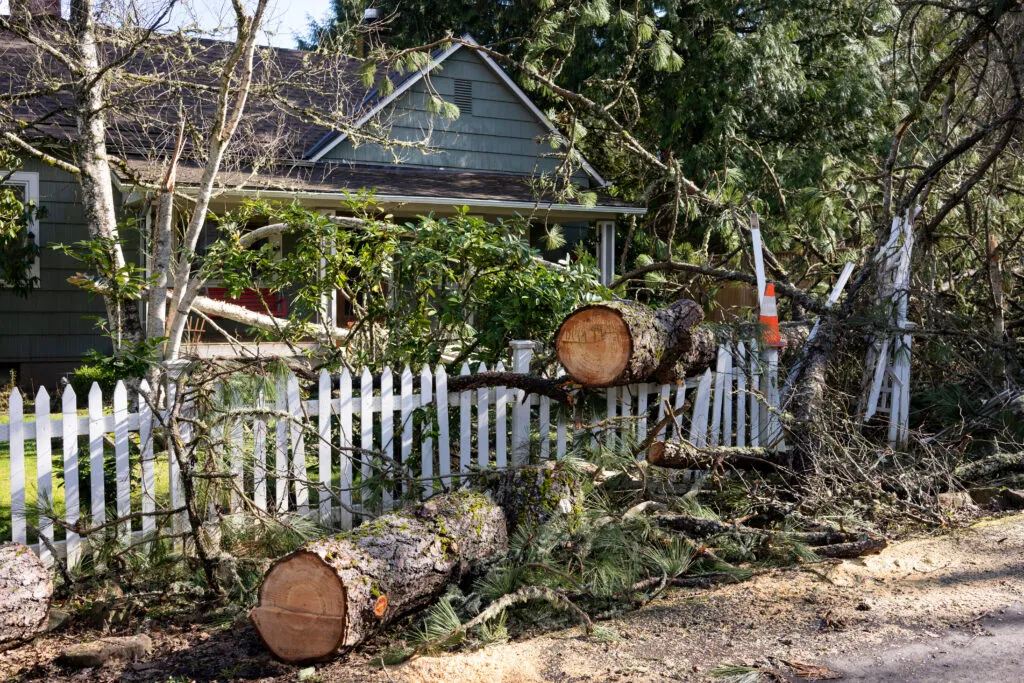
Wind and hail accounted for 42% of all homeowners insurance losses from 2018-2022, according to the Insurance Information Institute. Between 2018-2022, 2.8% of insured homes experienced a loss due to wind and hail damage, with an average claim severity (or cost) of $13,511 per claim.
Property damage due to wind and hail accounts for claims from one in 35 insured households every year. High winds and large hail can cause damage to windows, gutters, roofs, and trees near the home, leaving behind dents, cracks, and holes.
Water Damage and Freezing
Almost a quarter (24.7%) of home insurance losses made in the same five year average stemmed from water damage and freezing, per the Insurance Information Institute. From 2018-2022, homeowners of the 1.6% insured homes who filed a water damage or freezing claim had an average severity of $13,954.
Freezing temperatures can easily turn worn pipes into significant leak sources if they burst, leading to water-damaged structural components, foundation cracks, and mold. Each year, one in 60 insured homes experiences a property damage claim due to water damage or freezing, and the average premium among homes with this type of claim is $3,106.
Lightning and Fire
Losses due to fire and lightning accounted for 22.6% of claims filed in the same five year period, according to the Insurance Information Institute. One in 425 insured homes experiences a lightning and fire-related claim every year, bumping the average annual premium among these homes to $3,144.
Lightning and fire claims had the highest claim severity average at $83,991. Not only can fire ravage a home’s structure during the blaze, but smoke and water damage from firefighting efforts can also exacerbate necessary repairs.
Other Claims
Theft affects one in every 700 homes each year, per the Insurance Information Institute. The average claim severity of a theft claim was $5,024, compared to an average claim severity of $7,798 from other property damage (vandalism and malicious mischief).
From 2018-2022, theft was less likely to occur among insured homes than other property damage. However, both types of claims can leave homeowners cleaning up the aftermath of forced entry, including broken locks, damaged garage doors, and defaced surfaces.
Factors That Affect Home Insurance Premiums and Claims
Updating your home insurance policy, adjusting your deductible and premium for affordability, and bundling your insurance coverage can help lower the cost of home insurance. However, there are multiple factors out of your control that influence your homeowners insurance rates and fall within one of three categories: home characteristics, geographic risk factors, and personal risk factors. Explore these features in greater depth below.
Home Characteristics
Based on build quality, building material performance, and the insurance provider’s risk assessment, older homes tend to cost more, according to AAA. Newer materials tend to be more robust than their aged and weathered counterparts. In addition, homes made of brick tend to be more affordable to insure than those made of wood, according to the National Association of Insurance Commissioners (NAIC).
Your roof’s condition also directly affects your home insurance premium, according to AAA. Regular roof maintenance can help reduce the perceived risk associated with your home in the same way routine home maintenance can also lower your home insurance premium. Maintaining your roof can also help avoid greater damage to your home’s interior in the event of severe weather.
Inflation and correspondingly high interest rates have driven up real estate values, making homes—especially multi-million-dollar ones—costlier to insure, according to the NAIC. Supply chain issues, a skilled labor shortage, and a corresponding rise in the cost of building materials make it more expensive for insurance providers to cover homeowners’ repair or rebuilding costs, according to Travelers. As the square footage of a home increases, so does the cost of insurance.
Geographic Risk Factors
Insurance providers tend to assign a high risk value to homes located in areas affected by geographic risk factors, such as crime rates and natural disasters, per Kiplinger. A higher frequency of severe weather events—including wildfires, hurricanes, tornadoes, and floods—that generate more damage and a greater number of home insurance claims has recently driven up home insurance costs, according to Travelers.
For example, more than 2 million California homes were at moderate to very high risk of wildfire damage, according to a 2024 report from CoreLogic, which could have potentially affected homeowners insurance rates in those areas. Homeowners living in flood zones and coastal areas typically also pay more for home insurance.
Personal Risk Factors
While homeowners with higher credit scores tend to pay less than those with poor credit, states like California, Maryland, and Massachusetts prohibit homeowners insurance providers from using this metric to assess risk, according to Kiplinger. However, insurance carriers can still access a property’s claims history through the Comprehensive Loss Underwriting Exchange (CLUE) report—which tracks claims for as long as seven years after submission—to determine risk, according to AAA. Typically, fewer claims made corresponds to a lower risk in the eyes of most home insurance providers.
Low risk is also associated with homes with strong or comprehensive security systems, according to Kiplinger. A more secure home typically poses less risk to insurance companies, especially if it’s of relatively high value—and occupied. Secondary homes often cost more to insure if they’re unoccupied or occupied by someone who’s not directly covered under the home insurance policy.
2025 Home Insurance Trends and Insights
Half of customers surveyed by J.D. Power in 2024 faced a home insurance premium increase—initiated by the insurance provider—within the last year. These increases significantly impacted overall customer satisfaction ratings, reducing them by more than 100 points from 730 to 629. Some of the largest increases occurred in the following states:
- Arkansas
- Colorado
- Kansas
- Michigan
- Minnesota
- Nebraska
- Oklahoma
The average cycle time for claims and repairs was the longest in 2024 since J.D. Power began its study in 2008. It took 32.4 days from the time homeowners filed their claims to the time repairs were finished. In addition, the time between the first notice of loss and final payment exceeded 44 days.
The relationship between home insurance providers and their clients has been strained for some time. From 2018-2022, the average homeowners insurance premium rose faster—by 8.7%—than the rate of inflation, according to the U.S. Department of the Treasury. Homeowners living in areas with the highest expected loss due to severe weather events paid 82% more for premiums annually than homeowners in areas with the lowest expected loss, with 80% higher non-renewal rates and $5,000 higher severity claims on average.
All of this comes on the back of major insurance carriers exiting various high-risk states completely, according to USI. While it’s old news in Florida, the concept is new to homeowners in the Midwest and Plains states, according to Kiplinger. Homeowners can expect to continue to see higher non-renewal rates in states recently affected by severe weather events, often due to significant reinsurance costs borne by insurance providers.